
Laguna Beach is better when you read it like a composition, not just a beach day
Laguna Beach has plenty of obvious appeal on first glance: coastline, bluffs, public art, walkable pockets, and a town center that still feels like a real place rather than only a visitor funnel. But what makes Laguna stronger than a generic nice coastal town is not only the scenery. It is the way the place has been shaped into a recognizable visual language.
Main Beach gives you the public threshold. Promenade on Forest gives you the town's social rhythm. Laguna Art Museum makes the art identity explicit. Heisler Park turns the coastline into an elevated public composition. If you still want a bigger finish after that, Top of the World gives you the widest possible perspective shift.
That is a better Laguna day than chasing a bloated checklist.
Quick answer: keep the stop cluster compact, then decide if you want the optional extension
If you want the strongest short list, start with Main Beach, Promenade on Forest / Lower Forest Avenue, Laguna Art Museum, and Heisler Park. Then, only if you still have energy and want the bigger payoff, add Top of the World / Alta Laguna Park.
That sequence works because it moves cleanly from shared public image to town rhythm to art identity to bluffside payoff, instead of scattering your day across disconnected stops.
- Main Beach is the right threshold because it is iconic, accessible, and instantly legible.
- Promenade on Forest proves Laguna's public life is part of the appeal, not just the ocean backdrop.
- Laguna Art Museum changes the town from scenery into interpretation.
- Heisler Park is the strongest core visual payoff.
- Top of the World works best as an optional extension, not as something every visitor needs to force into the same walk.
1. Main Beach is the right place to begin
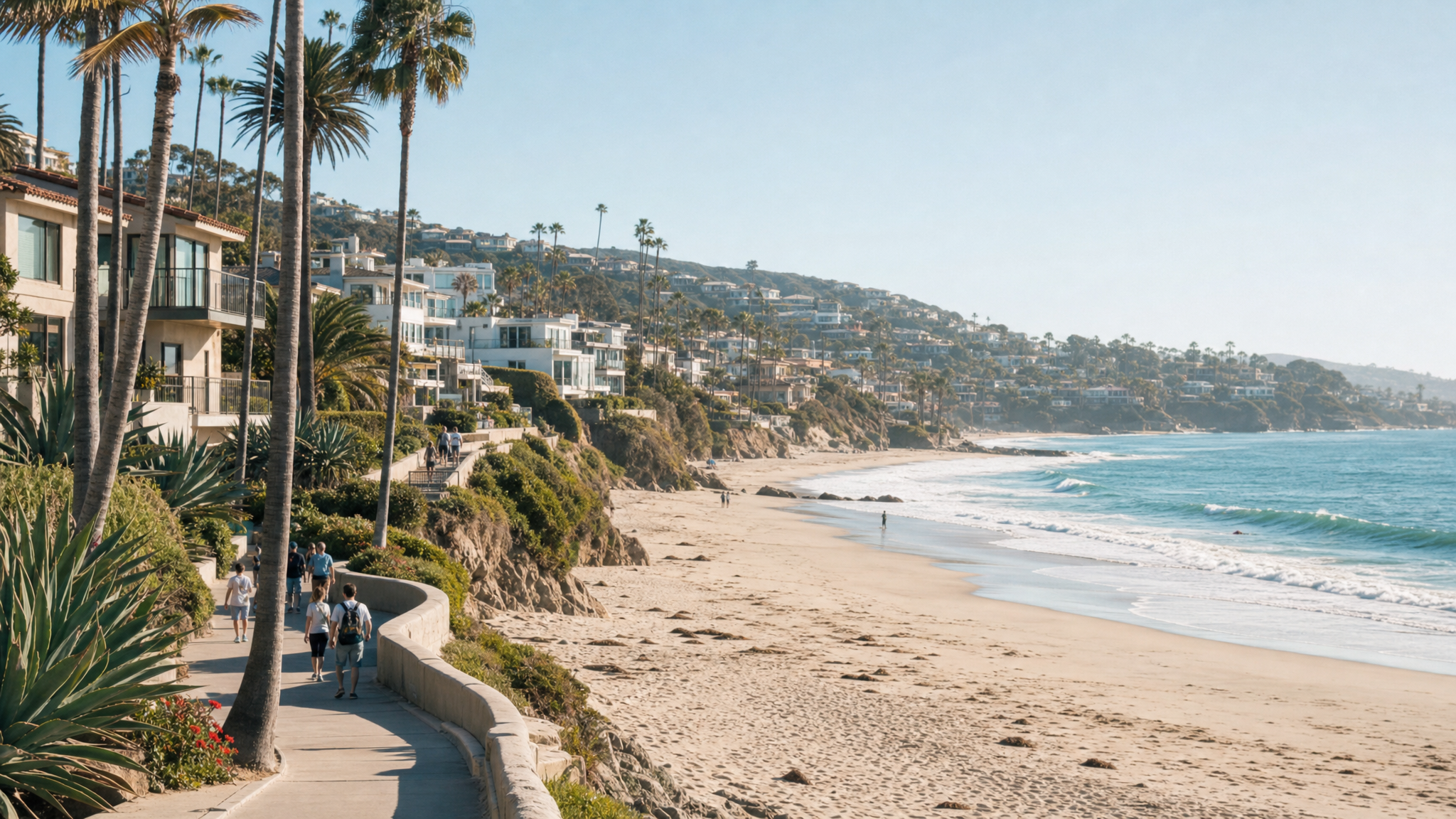
Official Laguna visitor guidance describes Main Beach as the town's most iconic, recognizable, and accessible stretch of sand. That matters because first stops should do more than look good in photos. They should orient the rest of the experience.
Main Beach works because it gives you the shared public version of Laguna immediately: sand, water, palms, hillside homes, promenade movement, and a view that already feels familiar before you have earned it in person.
If you are only choosing one place to establish the mood of the day, this is the one. Not because it is hidden. Because it is the cleanest threshold between Laguna as image and Laguna as place.
2. Promenade on Forest adds the town rhythm the coast alone cannot provide
A lot of weak beach-town guides quietly assume the coastline is the whole story. Laguna is more interesting than that. Promenade on Forest and the nearby public spaces show how the town keeps the scene moving after the initial shoreline impression.
People cross, pause, browse, and double back toward the water. Trees, storefronts, public gathering space, and the town's scale all make the movement feel human instead of sprawling or frantic.
That matters because public rhythm is part of Laguna's identity. The place does not isolate beauty from daily life very cleanly. It lets the two overlap.
If you skip this part of town, the day can feel scenic but thin. Promenade on Forest gives the route an actual middle instead of turning everything into ocean-view repetition.
3. Laguna Art Museum is where the art identity stops being implied and becomes explicit
Laguna's coast did not need human help to be beautiful. But the town's identity absolutely was shaped by people who kept studying, painting, organizing around, and teaching others how to look at that beauty.
That is why Laguna Art Museum matters. The museum describes itself as a California art institution, and it was founded by local artists in 1918. That is not a small detail. It means the art-town identity is not decorative branding glued on later. It is part of the place's actual long-term identity.
For a smarter Laguna stop list, this is where the day changes from scenic consumption into interpretation. You stop asking only what looks nice here and start asking how this place learned to see itself this way.
4. Heisler Park is the strongest core payoff
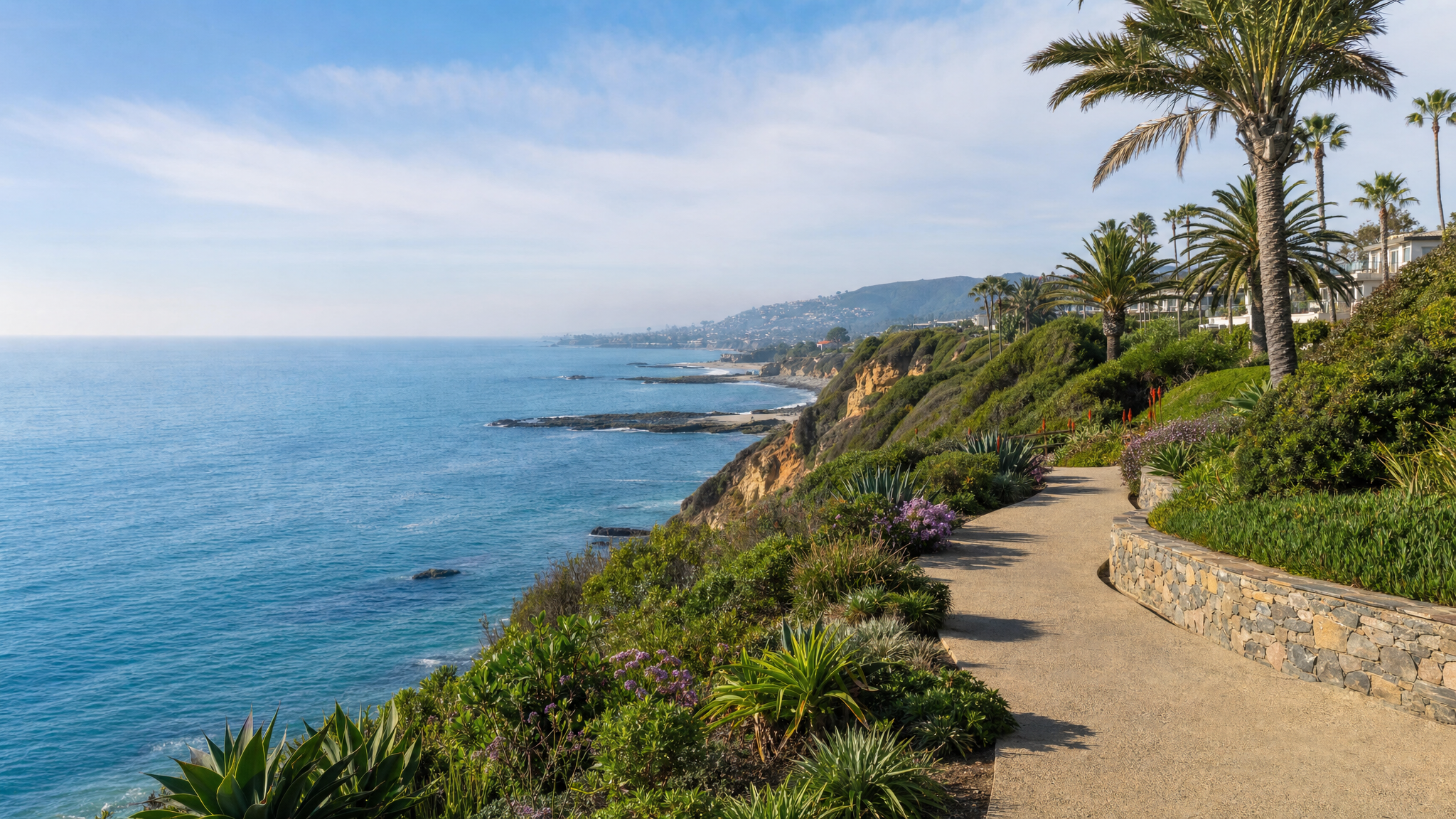
Official Laguna tourism material describes Heisler Park as an oceanfront bluff park with walking trails, gardens, and a marine refuge with tide-pool areas. That combination is exactly why it belongs near the end of a compact route.
Heisler does more than provide another view. It resolves the logic of the earlier stops. The coast opens wider, the bluff walk gives structure to the experience, and public-space design starts reinforcing the scenery instead of merely sitting next to it.
If Main Beach is the threshold and Forest Avenue is the public rhythm, Heisler is the moment the whole place finally reads as one connected composition.
That makes it the right core finish for most visitors.
5. Top of the World is the best optional extension if you want the widest frame
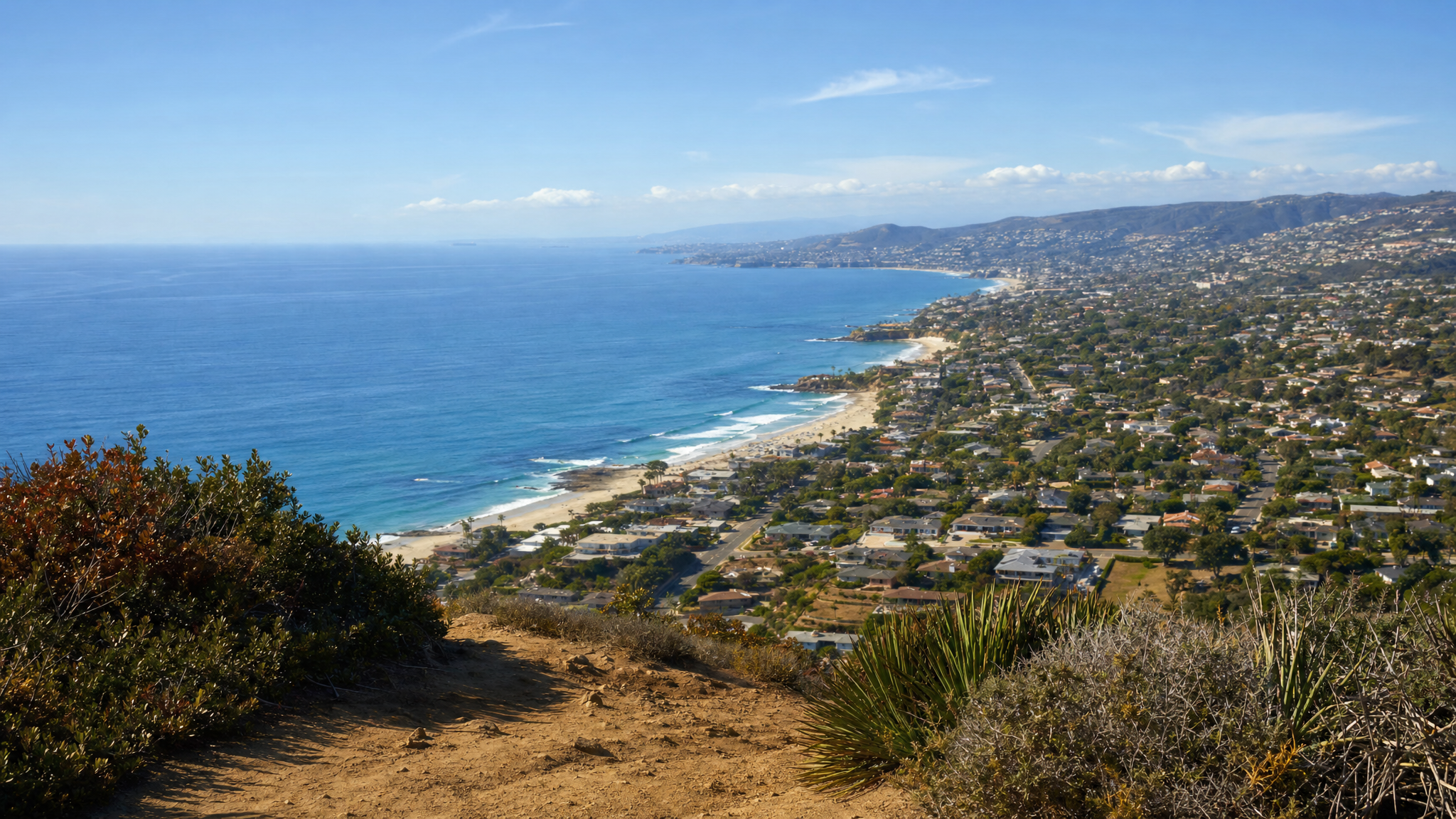
Top of the World is the kind of stop that can improve a day or ruin its pacing, depending on when you force it in.
The reason it is attractive is obvious: it gives you the widest possible perspective shift. What felt intimate below suddenly becomes spatial. The coast, neighborhoods, distance, and elevation all lock together.
But that is also why it should be treated honestly. This is not the same kind of stop as Main Beach or Heisler. It changes the effort profile. It is better as an optional extension than as a mandatory ingredient in every compact Laguna walk.
That does not make it weaker. It makes the route cleaner. If you still have energy after the core path, this is the right add-on.
6. The best Laguna stop list is one that knows when to stop
A lot of destination content gets worse by trying to look complete. Laguna does not need that treatment. It gets stronger when the stop sequence stays selective enough to preserve mood and movement.
That means threshold, rhythm, interpretation, payoff, and then an optional wider frame. That is a real route shape.
It is also a much better foundation for a guided Pathventure than a crowded grab bag of every nice place in town.
- Keep the core route walkable.
- Treat Top of the World as the extension, not the assumption.
- Let the article and route share the same spine.