
Catalina is better when you enter it like a story, not a checklist
Official Catalina history material notes that people have lived on the island for roughly 7,000 years, long before it became a resort destination. Later came the Spanish claim, the Banning family’s early resort-era development, William Wrigley Jr.’s 1919 acquisition, Hollywood glamour, wartime closure, and the long afterlife of Catalina as both a getaway and a symbol of California escape.
That matters because the best places to visit in Catalina Island are not just scenic. They feel charged by the island’s layered identity: arrival point, performance space, resort dream, conservation story, and memory machine all at once. A stronger Catalina sequence lets those layers build on each other instead of flattening them into interchangeable travel filler.
Quick answer: start where the island stages itself, then follow the pattern outward
If you only have a short visit, the strongest Catalina cluster is Avalon Bay, the waterfront around Crescent Avenue, the Catalina Casino, Descanso Beach Club, and the Wrigley Memorial & Botanic Garden. Those stops give you the island’s most recognizable views without pretending you can do everything in one stroll.
More importantly, they create an actual narrative shape. You begin with arrival and orientation, move through Catalina’s public face and most iconic landmark, step into a quieter shoreline where the island starts feeling less settled, and end in a place that points back to landscape, legacy, and older unanswered questions.
- Avalon Bay is the island’s threshold, not just its opening photo.
- The Catalina Casino is where Catalina’s public spectacle becomes impossible to miss.
- Descanso Beach Club works because it changes the mood without breaking the spell.
- Wrigley Memorial & Botanic Garden adds elevation, quiet, and the feeling that Catalina is older than the version sold from the promenade.
1. Avalon Bay is where the investigation should begin
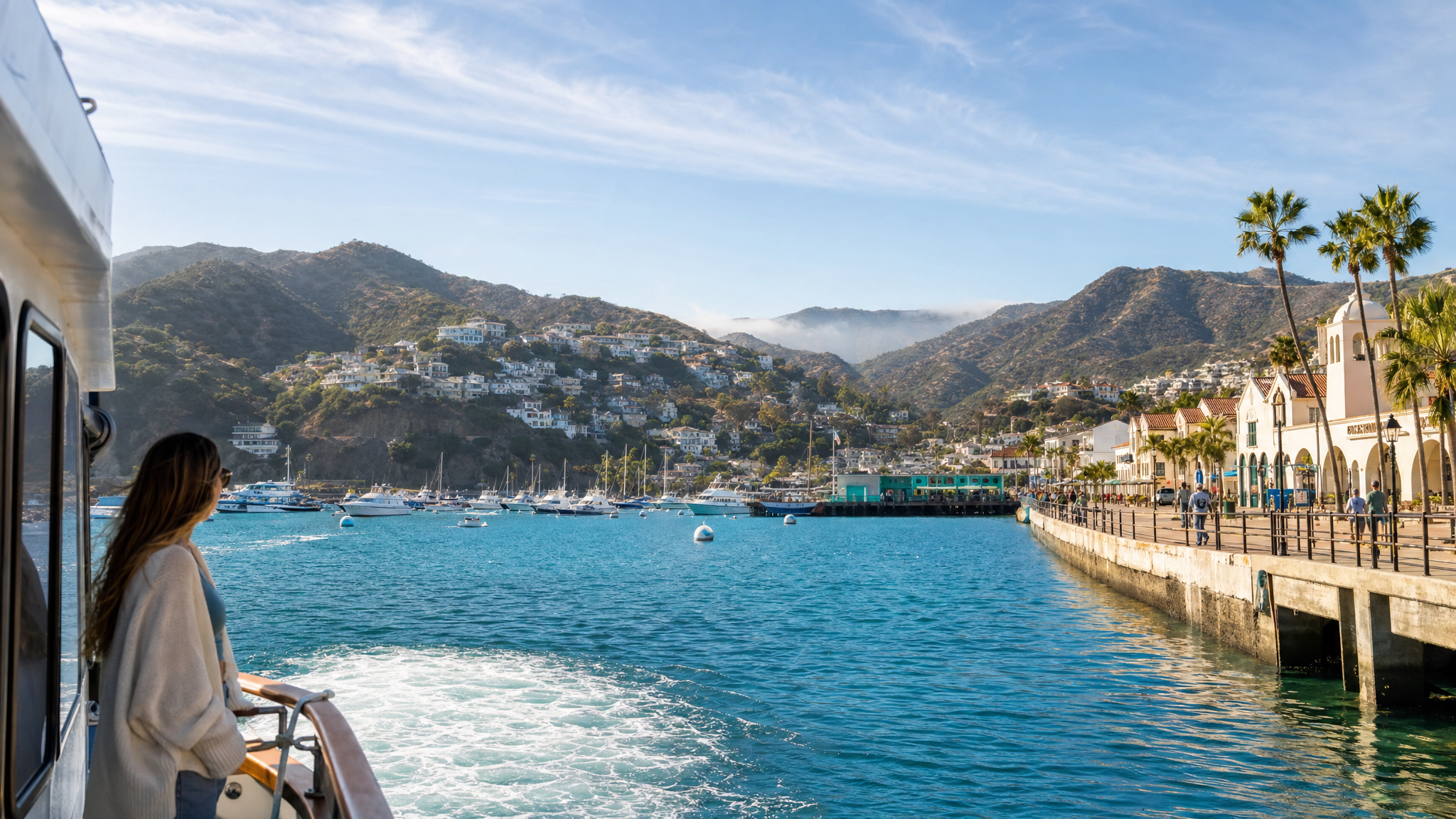
Avalon is the island’s only incorporated city, and official visitor guidance makes clear that many visitors enter through the Cabrillo Mole before walking directly into town. That makes Avalon Bay more than a pretty opening image. It is the actual threshold where Catalina shifts from idea to physical place.
That arrival energy is part of why the waterfront works so well. The curve of the bay, the hills framing it, the boats, the movement along Crescent Avenue, and the immediate sense of compactness all help visitors understand Catalina’s scale fast. Avalon is not just a stop. It is the island’s front door.
If you have only half a day, this is the place to slow down long enough to understand where the rest of the island branches from. The waterfront is scenic, yes, but it is also useful. It teaches you Catalina’s human rhythm before the more iconic landmarks take over.
2. The Catalina Casino is where spectacle turns into evidence
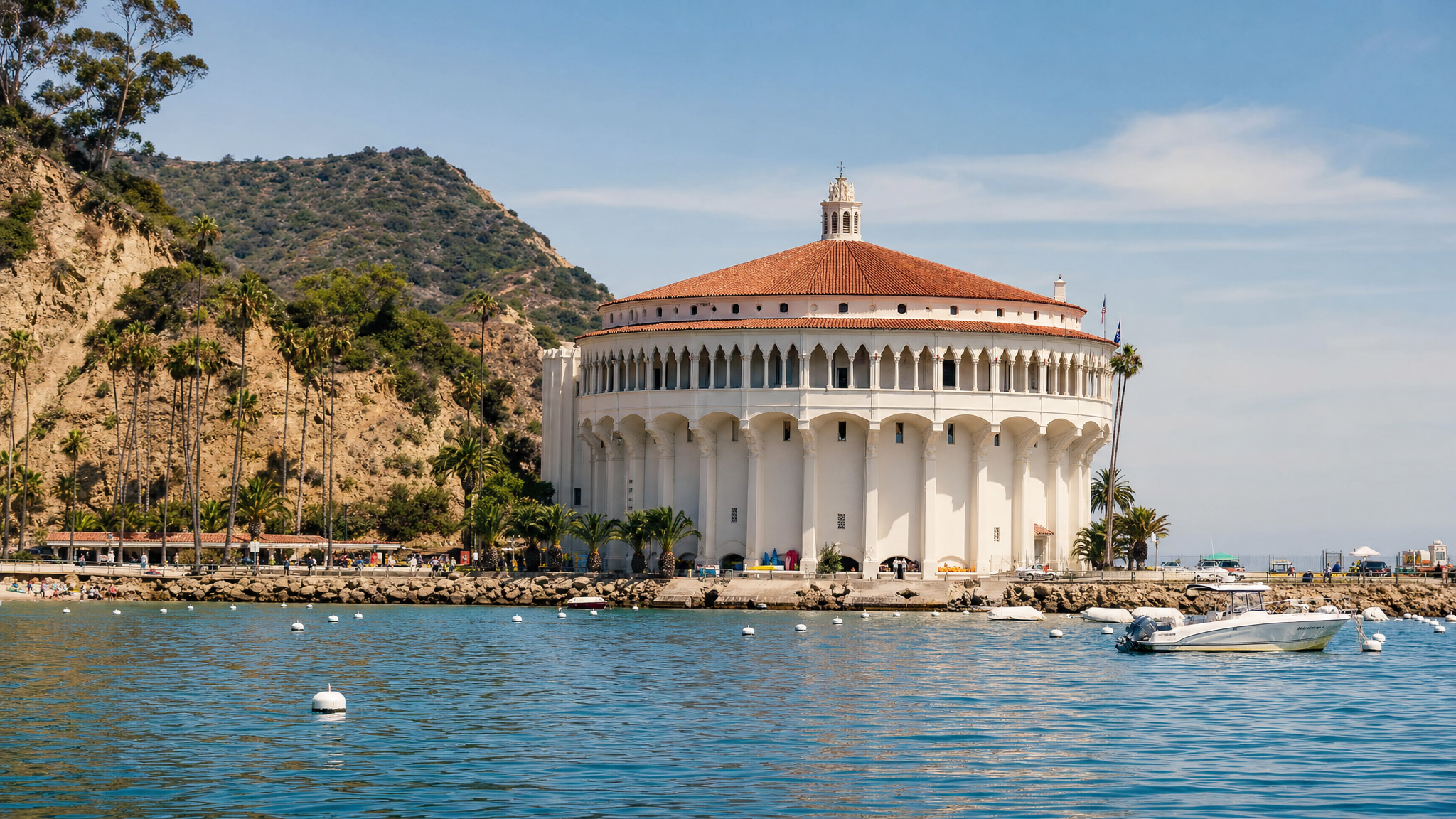
The Catalina Casino is one of those places that instantly gets more interesting once you know what it actually is. Official Catalina material notes that it opened in 1929 to mark the tenth anniversary of Wrigley’s purchase of the island, and that it became the social hub of Avalon nightlife rather than a gambling venue. That alone makes it a better article stop, because it lets readers replace a wrong assumption with a real story.
The place also earns its visual drama. The Avalon Theatre inside the building was among the first theaters designed for talking motion pictures, and the upstairs ballroom is still described as the world’s largest circular ballroom. So the Casino is not just photogenic. It is one of the clearest examples of Catalina as a place where resort spectacle, architecture, and island mythology all meet in one structure.
That is why this stop deserves more than a quick photo and a shrug. If you are building a short list of places that actually explain Catalina, the Casino belongs on it because it captures the island’s public glamour better than almost anywhere else.
3. Descanso Beach Club is where Catalina stops performing quite so loudly

Official Catalina guidance frames Descanso Beach Club as a continuation beyond the Casino and notes that it sits on one of the last private beaches in California that is open to the public. That is the kind of specific local fact that gives a stop texture. It is not just ‘a beach near Avalon.’ It is a beach with a particular social identity inside Catalina’s visitor culture.
That makes Descanso useful in an honest article because it gives people a softer counterpoint to the Casino’s architectural drama. Catalina needs both kinds of stops: the landmark that explains the island’s glamour, and the shoreline pause that explains why people stay longer than they planned.
It is also one of the easiest places in this list to overdescribe. The better move is to let the stop be what it actually is: a chance to feel the island loosen up after the denser symbolic weight of Avalon’s central landmarks.
4. Wrigley Memorial & Botanic Garden is where the island feels older than its public face
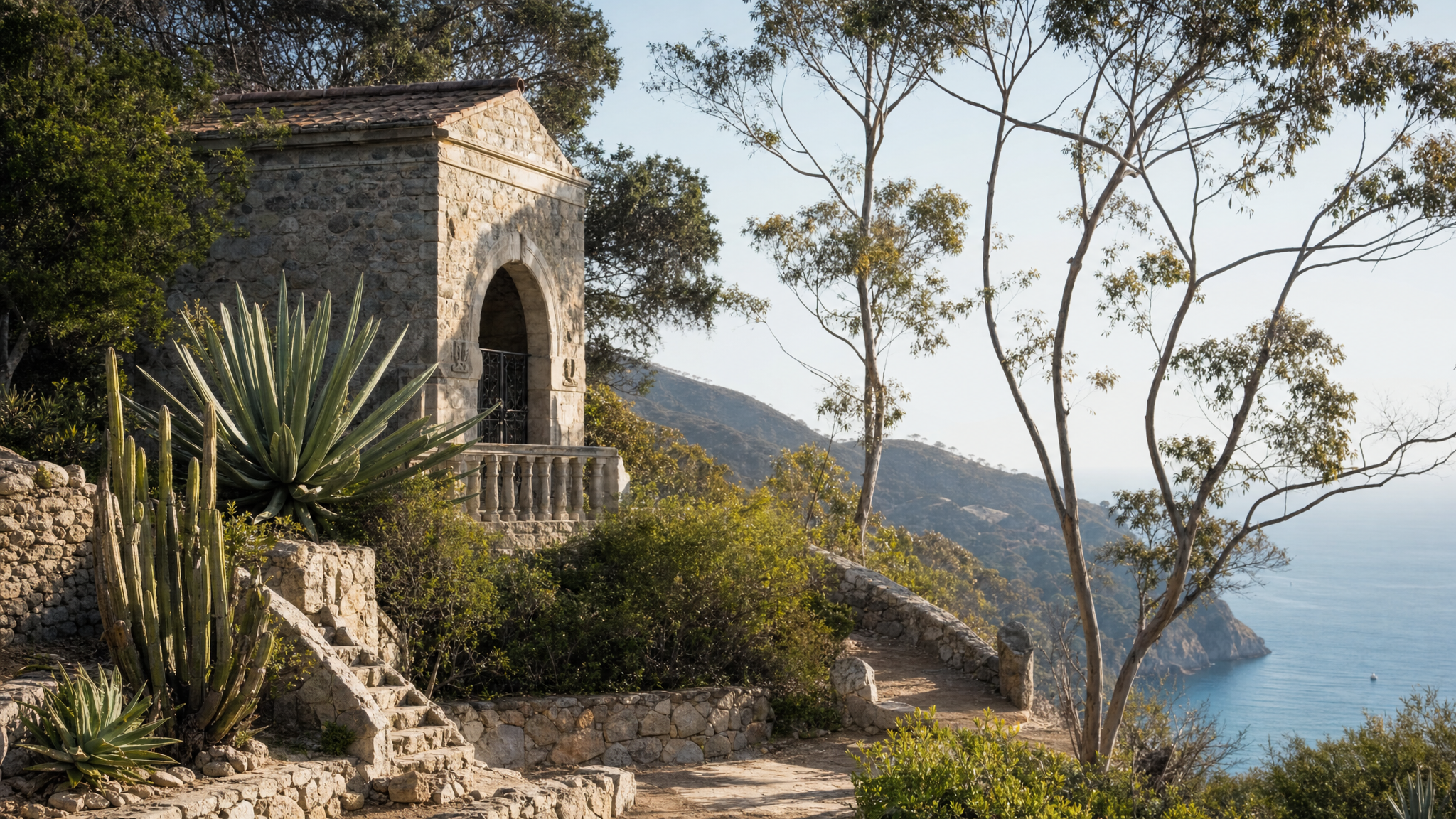
The Wrigley Memorial & Botanic Garden is where a Catalina itinerary starts feeling deeper than a waterfront wander. Official visitor material notes that it sits about a 30-minute walk up Avalon Canyon from downtown, while the Conservancy explains that the memorial was built between 1933 and 1934 using many island materials and that the garden helps preserve Catalina’s rare and endemic plants.
It is also the stop in this short list where transportation honesty matters most. Plenty of visitors will walk the canyon leg, but others are going to prefer a golf cart, bike, e-bike, or local ride rather than treat the uphill stretch like a casual extension of the promenade.
That combination is exactly why the stop matters. It pulls Catalina out of pure resort mood and into landscape, memory, and stewardship. You are no longer just looking at a destination people built for visitors. You are looking at a place where geology, plant life, legacy, and design all intersect.
For a stronger itinerary, this is one of the stops that changes the emotional register of the day. The climb, the materials, and the plant story all make Catalina feel more rooted and less theatrical, which is exactly why it belongs near the end of a thoughtful sequence rather than buried as a bonus stop.
5. Catalina changes depending on when you reach each layer
One reason thin travel articles fail is that they flatten every stop into one undifferentiated recommendation. Catalina does not really behave that way. The waterfront reads differently when ferries are still defining the day, the Casino grows more dramatic once you have already moved through Avalon a little, and the garden or memorial area feels more reflective precisely because it asks more of your legs and attention.
That is useful for visitors and useful later for narrative route design. If you understand when a place feels most open, most crowded, most theatrical, or most quiet, you can create progression instead of just stacking attractions in a row.
6. The best Catalina sequence leaves you with a question, not just a receipt of facts
A lot of travel content quietly lies by pretending a place is best experienced through an overstuffed checklist. Catalina works better when the route stays selective. A shorter sequence of high-identity stops is usually stronger than trying to cram in every possible activity.
That matters even more if you are thinking like an organizer, tourism team, or experience designer. The article and the eventual route both get better when the movement pattern is believable, scenic, and easy to follow. Catalina has enough built-in atmosphere that it does not need ten mediocre stops. It needs a smaller set of places that tell the truth about the island from different angles and leave a little wonder unresolved.
- Pick the stops that create contrast, not just volume.
- Let documented history and unresolved mystery coexist without pretending they are the same thing.
- Use map handoff for directions instead of stuffing navigation prose into every section.